
REVIEW: Baby Rose - YEARNALISM
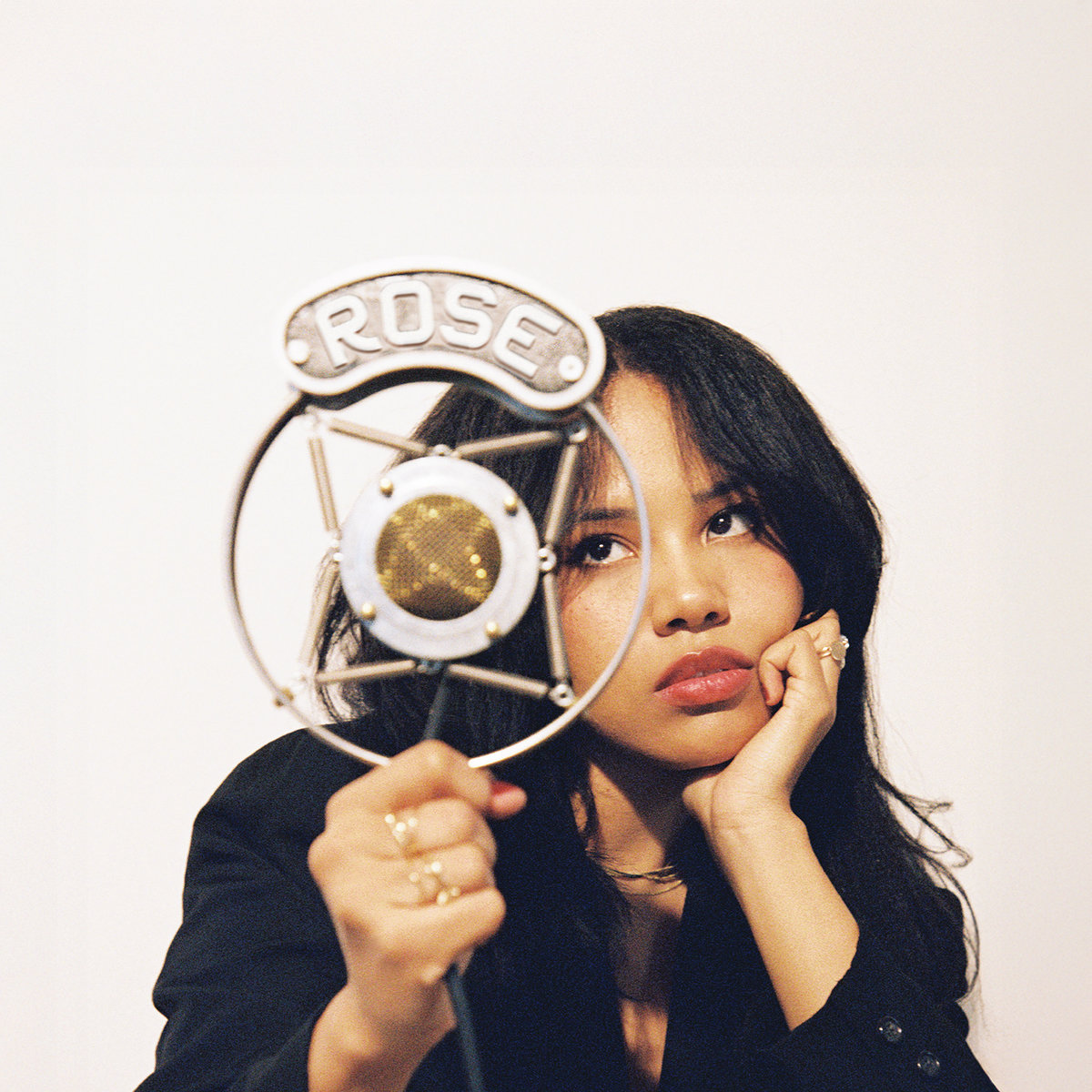
There is a particular kind of exhaustion that comes with knowing better but wanting anyway. Knowing someone is wrong for you does not automatically make them leave your system. Understanding that a relationship has run its course does not necessarily quiet the part of you that still wonders about its potential. You can call someone a waste of time and still find yourself asking, as Baby Rose does on the opening song of YEARNALISM, “Why you on my mind?”
That contradiction is where the album begins: the distance between what we know and what we desire.
Over the last few years, yearning has become something of a cultural buzzword. It has been aestheticised into a shorthand for beautiful sadness, often flattened into romantic longing. But Baby Rose takes the word somewhere more expansive. The title, a play on journalism, frames the album as a documentation of desire in its many forms: for another person, for freedom, peace of mind, repair, home and, ultimately, the ability to receive love without believing it must first be earned.
Because yearning, YEARNALISM seems to suggest, is not always a command. Sometimes, it is a clue.
The album’s opening stretch documents what happens when we fail to read those clues correctly. On When I’m Gone, Baby Rose is caught between conviction and attachment. She knows this person does not deserve her. She insists she will be fine. Yet beneath every declaration of independence is the inconvenient fact that they remain lodged somewhere beneath the skin. But, Nvm continues the contradiction. Having given someone “all my love,” she wonders whether it was enough, only to retreat behind the dismissive shrug of “nevermind.”
To expose your heart and immediately try to take it back. To ask a question you desperately want answered, then pretend you never cared for the answer in the first place. Perhaps because caring has become embarrassing. Perhaps because indifference feels safer than admitting that someone still possesses the power to disappoint you.
This uncertainty deepens on Is This Love?, where Baby Rose and Elmiene circle around a question that sounds simple until you have to answer it yourself: “Is this love?” More revealing, perhaps, is what follows: “Are you sure?”
For all the language we now have around relationships, intimacy has not necessarily become easier to understand. We have attachment styles, red flags, situationships and enough online discourse to diagnose almost every difficult interaction. Yet we can know all the terminology and still struggle to distinguish love from loneliness, familiarity from destiny, or desire from the fear of letting go.
When uncertainty lingers, we learn to protect ourselves from it. Dressed In Metal finds Baby Rose armoured, guarded and prepared for impact, but still unable to release the relationship entirely. She is “dressed up in metal” and yet she “can’t seem to let go.” It is easy to call this detachment, but the more you look at it, the more it resembles attachment with protective gear.
Perhaps the most exhausting relationships are not the ones we leave, but the ones we remain inside while constantly defending ourselves from them. Every conversation becomes another opportunity for injury. One little thing becomes two, and suddenly it is three in the morning and both people are back on their high horses, too tired to fight but seemingly incapable of putting their weapons down.
Then comes Friends Again, one of the album’s clearest portraits of yearning at its most complicated. Here, desire has crossed a line that cannot easily be uncrossed. Two friends have opened a door neither seems to know how to close, and the question is no longer whether they should be together. It is whether they can ever return to what they were before.
“Will we ever be friends again?” is devastating because sometimes we are not yearning for a person alone. We are yearning for a version of life that no longer exists. For the friendship before desire complicated everything. For the ability to unknow what we now know.
This is one end of YEARNALISM’s spectrum: yearning directed outward until it begins fighting against reality itself. But the album does not remain there.
Let Me Go and Better introduce a distinction between desire and obligation. “If you really love me, then let me go,” Baby Rose sings, turning one of love’s most familiar declarations on its head. On Better, the boundary becomes even clearer: “Can’t hurt myself just to save your feelings.” Wanting someone does not obligate you to remain with them. Missing someone does not mean they belong in your life.
Desire can tell you what you feel. It cannot always tell you what to do.
Yet YEARNALISM is too interested in contradiction to turn this into another “protect your peace” manifesto. On The Reason, Baby Rose repeatedly searches for an exit only to “fold right back into the feeling.” The song complicates the increasingly popular idea that difficulty itself is evidence that something should end.
Modern dating culture has given us more options than perhaps any generation before us, but abundance has produced its own anxieties. There is always another profile, another possibility, another person who might be easier. We are increasingly fluent in identifying what is wrong, but perhaps less practised at asking what is worth working through. The danger, of course, is romanticising endurance. YEARNALISM has already shown us what happens when persistence becomes self-abandonment.
So it leaves us with the more difficult task: discernment.
On The Reason, she sings, “You’re so nonchalant about the way I feel / and I’m no better ’cause I’m here still.” It left me asking myself: How do we distinguish devotion from self-abandonment? Sacrifice from suffering? Commitment from fear?
The album never gives us a clean answer. Yearning can lead us towards what we need and towards what destroys us. Learning the difference requires a kind of self-study.
It is fitting, then, that the album’s turning point arrives not in a grand revelation but hungover on a Sunday morning.
There is no alarm clock ringing. Only birds singing. Clothes are still piled where they were left. The future cannot be decided and the past cannot be outrun. Nothing has been cleaned up yet. And still, something changes.
Sunday is the spiritual centre of YEARNALISM, the moment when its yearning turns inward. After spending much of the record reaching towards other people, Baby Rose begins reaching for peace, home and the possibility of a new beginning. Redemption, she suggests, does not require a new year or some dramatic reinvention. Sometimes you can simply decide to start again.
What makes Sunday so affecting is that redemption does not arrive after the mess. It arrives inside it. “Making something of all the mess I made,” she sings, imagining herself washing it off like laundry, every little stain.
The peace she longs for is deeply domestic: dancing in the kitchen, her mother’s dinner after church, an uncle’s sermon. Home becomes more than a physical place. It becomes a state of return.
That return changes the album’s relationship to connection. Healing does not make Baby Rose unreachable. On Believe Me, she still picks up the phone, still hopes it is not too late to make things right. But by All My Love, the emotional frame has widened considerably. When I’m Gone begins with “Why you on my mind?” All My Love arrives at the simpler recognition that “we all need a friend.”
The album stops asking what another person can give her and begins considering what we might offer one another.
An older woman on a train offers perspective. A friend’s new baby offers another. These encounters interrupt the illusion that whatever we are currently going through is the entirety of our lives. There is always someone who has survived something we have not yet learned how to survive. There is always a child who reminds us that we once arrived here with the same innocence and curiosity.
After an album spent examining wounds, Baby Rose eventually turns towards the listener and offers tenderness. Not a solution. Just the assurance that loneliness is not proof of isolation.
The album’s deepest resolution, however, is reserved for Jasmine’s Sonnet.
Here, the central relationship is no longer romantic. Baby Rose is reaching towards a younger version of herself, someone she seems to have lost “somewhere along the road.” Beneath so many of the album’s other desires lies a more foundational question: what happens when we believe love must be earned?
Look back at the evidence. “Was it not enough?” she asks after giving someone all her love. She fights to make things right. She folds back into difficult feelings. She wonders whether love is real.
And beneath all of it is a much older hunger: the need to be chosen, validated and assured that we are enough.
Jasmine’s Sonnet quietly begins undoing that logic. Its language is strikingly different from everything that came before. The arguments disappear. In their place are trees, storms, flowers, birds, water, rain and moonlight.
Nature becomes the album’s final teacher. The flower does not perform in order to deserve its seed. The birds do not audition for the right to sing. Water does not need to prove it deserves to run.
“Let your love come,” Baby Rose repeats. The phrase feels radically different from the verbs that have defined so much of the album: holding on, fighting, searching, waiting, calling, leaving.
Now, there is letting. The movement from pursuit to surrender is YEARNALISM’s most profound transformation. Not surrender to another person, but to the possibility that love need not always be chased, proven or earned.
That philosophy is embedded in the album’s sound, too. YEARNALISM uses classic R&B, soul, blues and rock to explore distinctly contemporary anxieties. Its warmth comes from a deliberately tactile process involving analogue gear, tape and live instrumentation. Songs created across different periods were revisited and rebuilt into something cohesive, with restraint becoming part of the process.
There is an interesting echo here. Modern life encourages infinite revision: more options, more versions, more optimisation. But analogue recording and meaningful intimacy eventually demand the same thing: a decision. At some point, you have to choose what stays. You have to accept imperfection. You have to stop tweaking. You have to let something be.
This is not nostalgia for a simpler era of love. There has never been one. People have always mistaken familiarity for destiny, stayed too long, left too soon and wanted what they could not have. What has changed is the architecture around those ancient questions. We now live with an abundance of access and alternatives, where the possibility of someone else is always quietly present. We can mistake having endless choices for knowing how to choose.
Against that backdrop, YEARNALISM’s old-world sonics feel almost like a reminder: technology may change how we meet, communicate and leave one another, but the questions beneath desire remain ancient.
What do I want? Why? And what is this wanting trying to tell me?
Perhaps that is what makes YEARNALISM such an apt title. Like journalism, Baby Rose does not attempt to solve the story she is documenting. She gathers evidence. She follows contradictions. She studies desire from enough angles to understand that it cannot be reduced to one thing.
It can make us lose ourselves. It can also lead us back.
By the end of YEARNALISM, we are far from that opening question, “Why you on my mind?” Somewhere along the way, the hunger changes shape. The reaching softens. The clenched fist opens.
The clothes are still where they were left. The past has not disappeared. The future is still undecided. But outside, the birds are singing. And perhaps that is enough to begin.
Different Dialects. Same Language: Why Great Art Doesn't Need to Reinvent the Wheel


